

1.
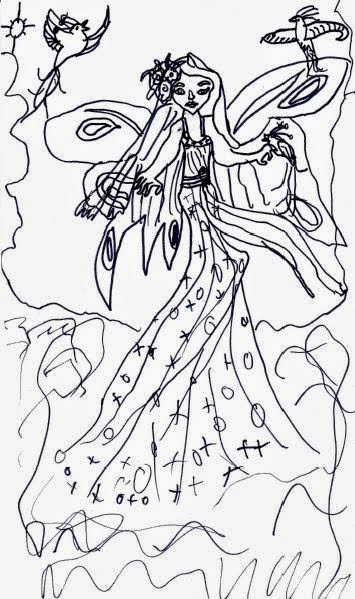
The short answer is that Musikon is a general ontological category I introduce in my dissertation, Musika: The Becoming of an Artistic Musical Metaphysics (Leiden 2020). It signifies a musical entity, where musical entity is defined as
a self-contained interactive system based in organized sound, with the ability to evolve and to manifest different characteristics at different circumstances, upon different considerations, to different effects.
But then, the question persists, if ‘musikon’ signifies ‘musical entity’, why introducing a neologism when there already exists a meaningful term at our disposal? The answer to this is that the term ‘musical entity’ is neither unproblematic nor univocal. ‘Musical entity’ could mean a complex musical being-in-becoming one can get obsessed with or even possessed by, and it may also mean an independent musical idea or being, e.g. melody, Mozart, ornament, waltz, Glen Gould, symphony. In fact, according to ethnomusicologist Bruno Nettl each culture has its own notion and definition of that which constitutes a musical entity (Thought on Improvisation 1974). Let us consider a few examples.

The idea of the Tone as an entity could be traced back to Confucian times: the text Yueh Chi (circa 500 BC) describes music as an instrument for inducing order and as a tool for the inward transformation of the person, for her internal harmonious alignment. The composer Chou Wen-Chung suggests that in Yueh Chi musical tones are considered musical entities and quotes the following passage: “One must investigate sound to know tones, investigate tones to know music … without the knowledge of sound… one cannot speak of music” (in Chou 1970). “It is therefore believed,” continues Chou, “that single tones, rendered meaningful by their acoustic attributes, are musical entities by themselves as well as musical events within the context of the composition” (Ibid.).
Another view on the nature of musical entity emerges from within the aesthetics of Indian Rāga. “These rāgas live and breathe in a way, they have characters and moods that are meant to be evoked by playing” explains sitar player Anoushka Shankar, admitting that it is difficult to put in words all that rāga is (2013). Musicologist Wim van der Meer decribes Rāga as an idea at once “singular, multiple, essential and collective”: “Technically, rāga is a musical entity in which the intonation of notes, as well as their relative duration and order, are defined,” writes Van der Meer (1980: 3). In addition to the technical, Rāga has an ideational aspect, an abstract image, “on which one can concentrate and from which inspiration can be derived” (Ibid.). When the technical and ideational aspects are aligned in performance, the measurable, ‘scientific’ foundation of the Rāga is subsumed in the ‘magic’ presence through which the entity manifests itself. Indeed, it is the view commonly held by many musicians in India that a rāga is a coherent musical entity, a supernatural power, a deity that one can meditate upon or surrender to (Meer 2008: 29).
We often speak about the face of a rāga. We know and recognize faces immediately (in the Bergsonian sense), not by analyzing the shapes, colors, etc. of the face. When I see someone I know, I will say: “Hi Mira.” I do not have a list of determinations. That’s how rāga works also… if we know it ().
Van der Meer 2018, personal correspondence
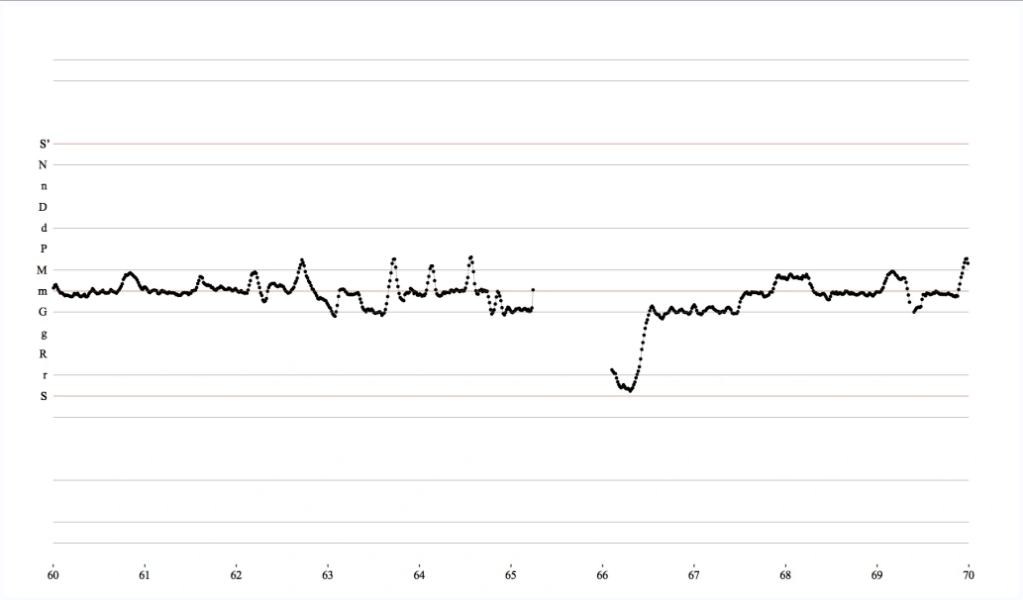
Does not this act of ‘recognition’ apply to composed music works and even, in many cases, to compositional music worlds as well? We recognize Chopin, Shostakovich, Wagner – if we know them. Which brings us to the idea of the Music work as musical entity. Musicologist Nicholas Cook defines the Music work as a bundle or collocation of “attributes that may be variously selected, combined, and incorporated within any given actualization of the music’s meaning” and also, as “unstable aggregates of potential signification” (2007: 232). Researcher and performer Paolo de Assis views the music work as a metastable construction. In the music ontology I develop, the Music work is a nonlinear, nonlocal, compound, heterogeneous entity with different evolutions, among which these two: it could be regarded as Musical assemblage that actualizes in performance(s) or as historical entity, as invented by Romantic aesthetic around the 1800s,[1] which heroicizes the Creator/composer as the Great Man, proclaims music as the Ultimate Art and the ‘musical work’ – as a true Word from Its gospel.
. . . and these are only three of the many-splendid faces of the ‘musical entity’. Obviously, it is a term suffering postmodern aches, as many do nowadays: all is relative, all is spelled by the context, all is and is not. However culturally sensitive, musically adequate, and politically correct this situation may be, it does not aid clarity, especially in the field of musical ontology. What we could do is… no, we could not simply fuse all these minute meanings and nuances of the term to cook one great universal pot of soup, but we could nominate an avatar – a shared denominator to highlight the common point, the likeness and similarity between all these music creatures, to consolidate and embody their ethos. Enters the Musikon.
2.

Pokémon is a Japanese media franchise started in 1996 as a video game and proliferated into card games, manga series, anime and live-action film series, and books, to become the highest-grossing media franchise of all times. It fosters a hyperlinked, rich, interactive, involved mythology whose main characters are magical creatures called Pokémons. The word stands for “Pocket Monster.” There are a few aspects of the Pokémon that are of interest here. One of them is the fact that the Pokémon is in a tight interdependent relationship with a human, called Pokémon Trainer. The latter needs to catch a wild Pokémon and, appropriately, train it for a combat with others. On the outcome of that combat depends Pokémon’s further journey, which brings us to the second interesting aspect – Pokémon’s ability to undergo metamorphosis and to transform into a similar but stronger variant. The process, called ‘evolution’, occurs spontaneously under differing circumstances and is specie’s specific: most species of Pokémon undergo three evolutionary transformations, many of them – two or one, and some may not evolve at all. It is only the Pokémon called Eevie that is known to have achieved eight evolutions.
The game is not particularly politically correct,[2] and I would not have brought it here if it was not for my obliging a certain funny idea (ideas are truly the viruses of the mind!). One day I was going through the packs of Pokémon cards of my children. Listening their merry jabber about collections, exchanges, trainers, and evolutions, and admiring the creatures and the beautiful artwork, I was suddenly struck: hey, this is similar to music. Pokémon universe weirdly reminisces of how we treat, teach and theorize music and its various ontological entities and categories. There is a line dividing the composer from the opus, the score from the performance, the music work from the improvisation, the physical from the sonic: a flickering iridescent dividing line. On the one side roam virtual musical assemblages as ‘tremulations on the ether’, ephemeral entities, magical creatures and music monsters, and on the other – we humans with our music toys, techs, extensions, and prosthetics. The relationship? We humans make music, we humans own music, we humans train, morph and shape music works, instill them with human meaning, ensoul them into golden records, and even send them with a golden Voyager out into the Cosmos to seduce and hunt alien life. As true trainers, we devote hours, years, and lifetimes to catching a music monster, to tame and prepare it for the arena to combat others of its kind. And to beat them! Ethics? “GOTTA CATCH ’EM ALL!”[4]
How I love me to play with some magic beast!
And it loves me back too.
Where would it be
If not for me?
Like Pokémons, musical entities have different evolutions, too. As polysemic virtual (cluster of related) phenomena, they manifest different characteristics at different circumstances, upon different considerations, to different effect. They, too, evolve and inhabit a hyperlinked, busy, interactive dimension, like Pokémon universe. Many of the numerous species and evolutions of musical entities we have already named, without necessarily being conscious of their creaturedome and kinship. Others I recognize in my musicologica through terms like Musical assemblage, Musical Individuated Unit of Consciousness, Musinculus, Musikling, Composer, Performer, Musika. . .. Different names – different meanings. The aliveness of the music phenomenon, for example, is underlined by the term ‘Musical Entity;’ its mechanical, physical, contrived and artificial aspect is disclosed in the neologism ‘Musinculus;’ ‘Musikling’ suggests an agent inhabiting particular ecology or a reality frame like ‘Musika;’ the concept ‘Music work’, with all its historical baggage, brings forth the solid core of an entity that endures through all spatiotemporal transformations. . ..
And so, to the plethora of music beasts I add a meta-beast and name it Musikon. The Musikon is an umbrella term denoting the connections and relations between musical entities, on the one hand, and the singularity and fine distinctions between these entities – on the other. Honoring its genealogy, the term refers to the different qualities and attributes or functions of musical phenomena.
I’ll never be your beast of burden
The Rolling Stones – Beast of Burden from “Some Girls,” 1978
My back is broad but it’s a hurting
All I want is for you to make love to me
I’ll never be your beast of burden
I’ve walked for miles my feet are hurting
All I want is you to make love to meee….
[1] See E.T.A. Hoffmann’s “Beethoven’s Instrumental Music” from his novel Kreisleriana (1813), translated by Arthur Ware Lock (1917, pp. 123-133).
[2] The franchise has drawn a lot of controversy and criticism, receiving a plethora of blames ranging from promotion of gambling, occultism, anti-Semitism, and violence to accusations of animal cruelty. The list is not exhaustive.
[3] As per the beautiful wording of D.H. Lawrence, Why the Novel Matters, 1936.
[4] The English slogan of the franchise.
Bibliography:
Chou, Wen-Chung. “Single Tones as Musical Entities: An Approach to Structured Deviations in Tonal Characteristics” in American Society of University Composers, Vol. 3, 1970.
Cook, Nicholas. “Music, Performance, Meaning: Selected Essays.” Routledge 2007.
Meer, Wim van der. Hindustani Music in the Twentieth Century. Springer, 1980.
Meer, Wim van der. “Improvisation, Change, Works and Ragas” in Dutch Journal of Music Theory, Vol. 13, November 1, 2008.
Shankar, Anoushka. Anoushka Shankar – Traces of You: What is Raga? Published online by Deutsche Gramophone on October 4, 2013 https://www.youtube.com/watch?v=WghXM8s4jqU Accessed May 16, 2019.
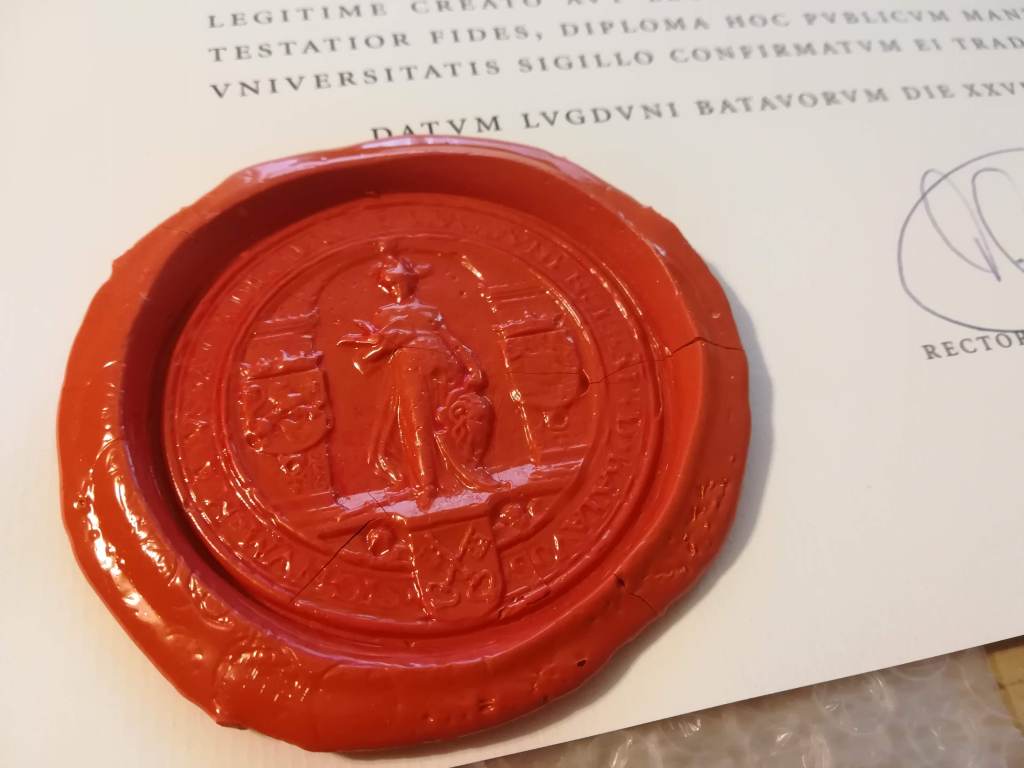
 the musikon